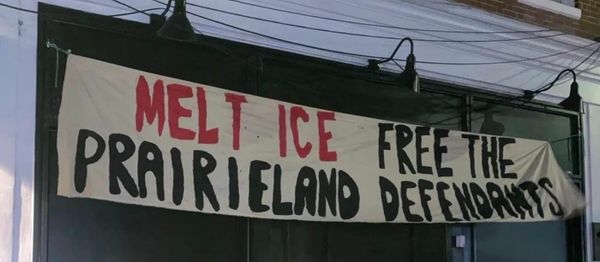
Prairieland 19 Case Update
The Prairieland 19 trial collapsed on day one in federal court, spotlighting how politically charged protest cases are handled. The case previews aggressive prosecution tactics, the implications it has beyond the courtroom, and what to watch as it moves forward.


Much has happened in this case since we last updated you back in October.
You can read our initial article about the case here.
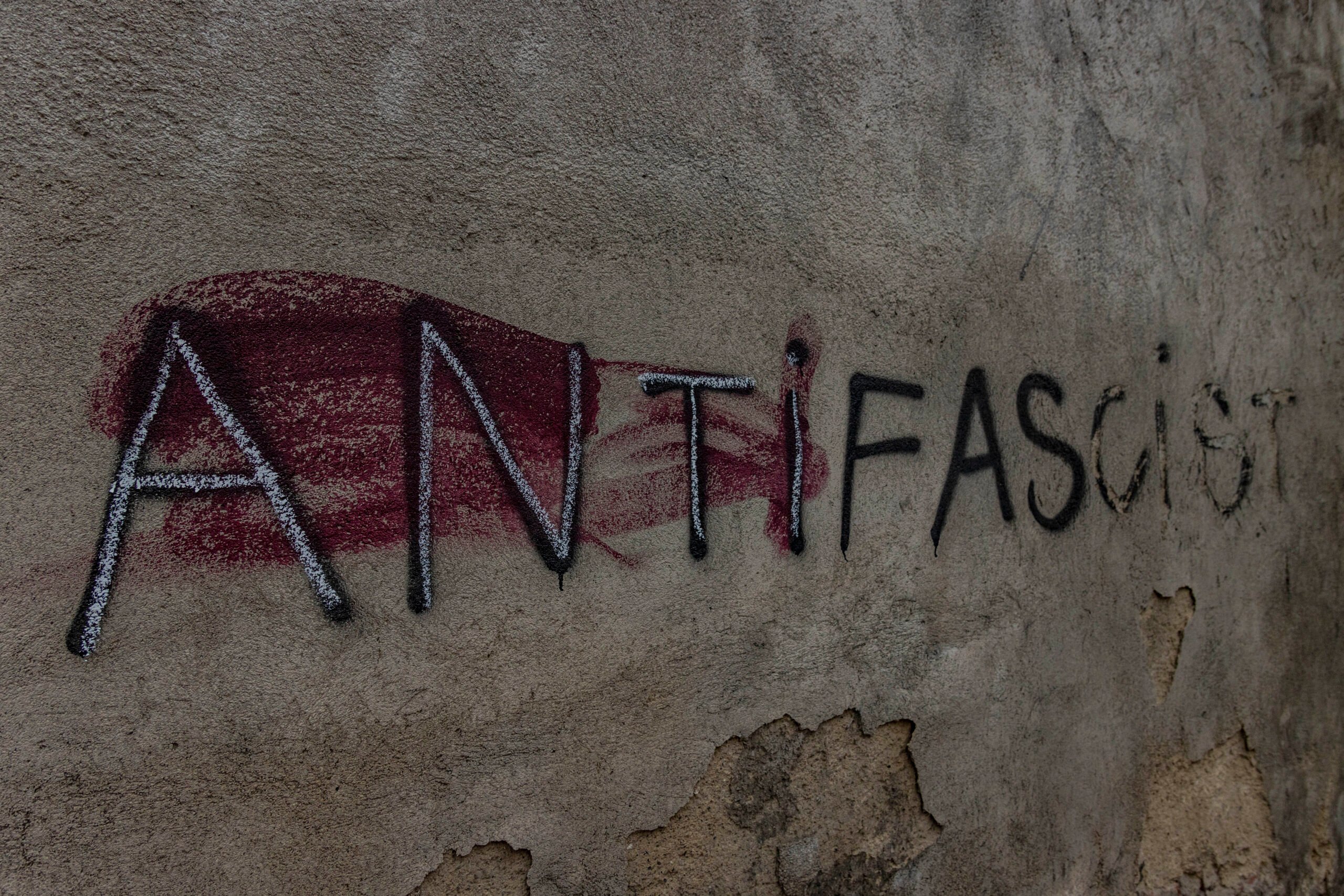
This marks the first time the government has filed terrorism charges against “Antifa." Legal experts are raising alarms over prosecutors’ theory — arguing defendants, including some who were not even at the demonstration, are part of an organized criminal “Antifa cell” and broader conspiracy.
“This is the first indictment in the country against a group of violent Antifa cell members.”
— U.S. Attorney Nancy Larson
Brief Overview
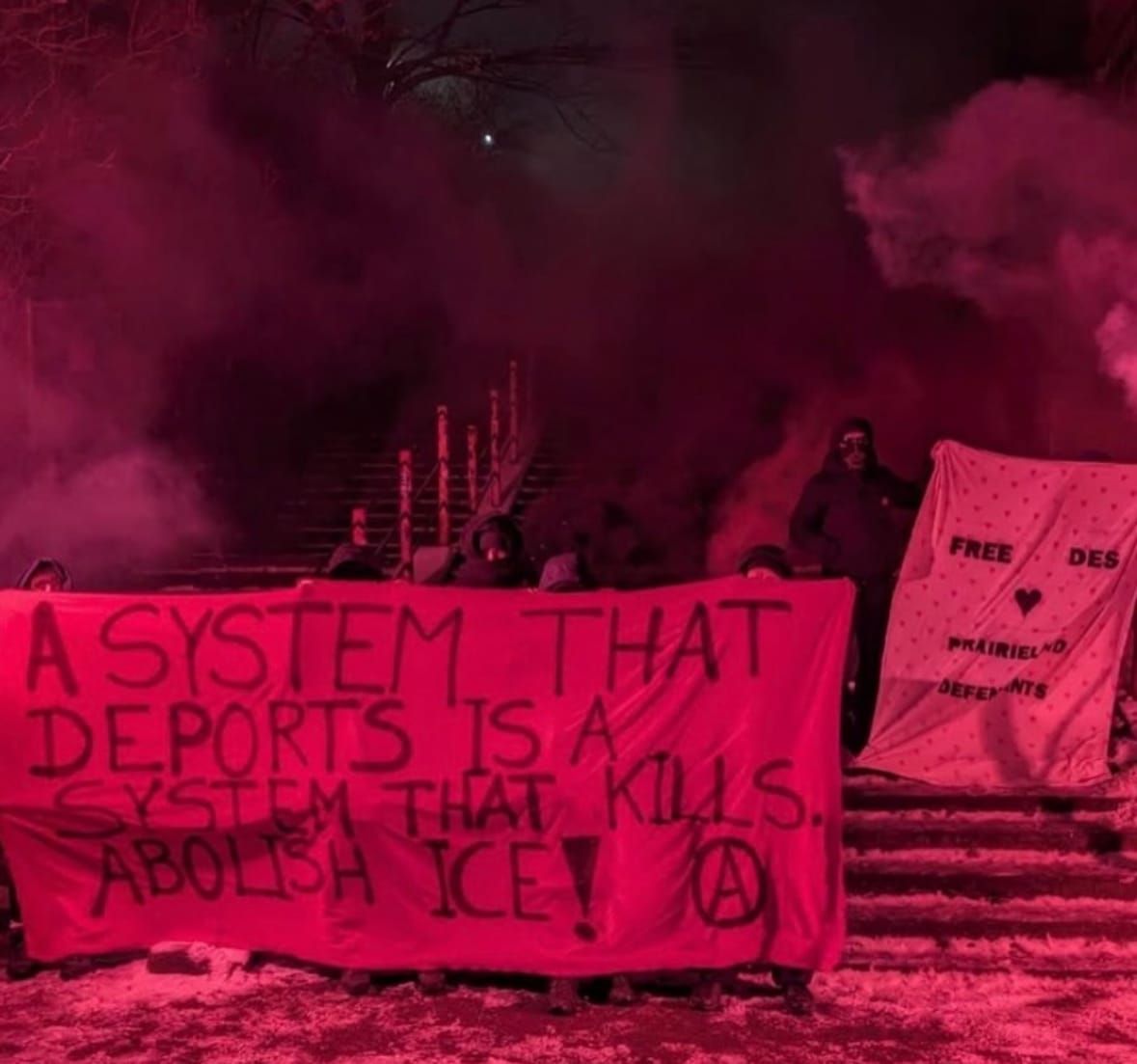
On July 4, 2025, about a dozen people gathered outside the ICE detention facility in Alvarado, Texas, the Prairieland Detention Center, for an autonomous noise demonstration.
Prairieland is the same facility where political prisoner Leqaa Kordia has been held for nearly a year.
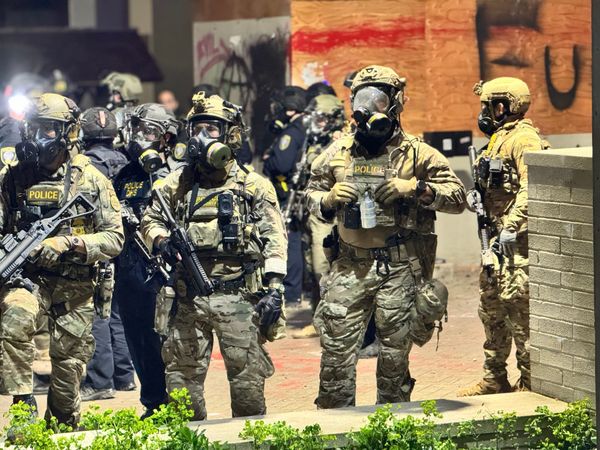
During the demonstration, court documents allege that a guard shed, multiple officer vehicles, and other facility property were spray painted while fireworks were set off.
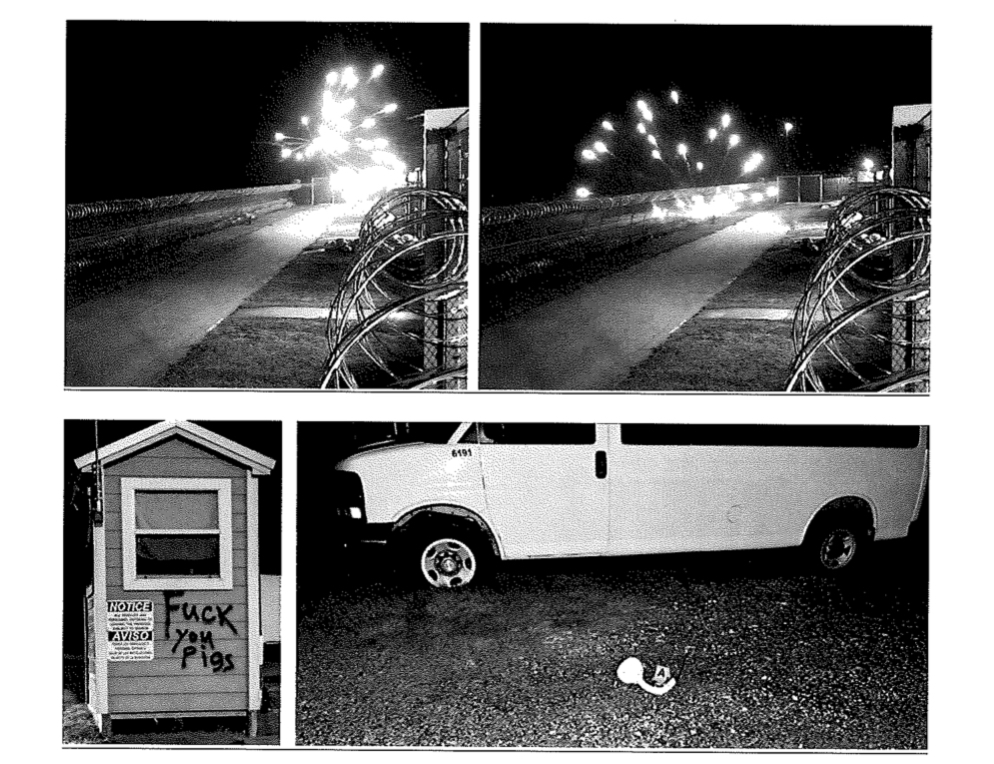
According to federal indictments, after DHS agents called local police for backup, an Alvarado police officer was shot in the neck by someone allegedly connected to the demonstration.
There are multiple inconsistencies in the state’s case regarding when the alleged shots were fired.
One indictment claims the officer arrived, began issuing commands, and was then shot after someone called for rifles. Another criminal complaint alleges the officer was shot immediately after stepping out of his vehicle.
What is confirmed: the officer was transported to a hospital by an emergency helicopter and later released.
The officers body camera footage from that night is less than three minutes long, and it ends abruptly after he is shot and yells, “Fuck, I’m hit!”
Additional reporting of the case reveals that the officer was even able to walk over to an Alvarado fire marshal who arrived on scene shortly after the shooting. The fire marshal then cut open the officer’s uniform before stating, “It grazed you, bud”.
According to the last update from the support committee, the federal government has not provided the officer’s medical records in discovery packages, despite the alleged shooting being central to the prosecution’s case.
There are many open questions that remain in this case. According to documents viewed by The New Republic, "federal prosecutors initially claimed that multiple assailants armed with AR-15–style rifles shot 20 to 30 rounds at Gross and the officers. By early August, state filings indicate that only 11 shell casings were found at the scene, suggesting just one shooter, and leading investigators to believe the initial 20–30 shell casings to be an inaccurate amount of spent rounds. Finally, in a lengthy preliminary hearing in September, an FBI official told the court that he could not say where the first shots came from.”
TNR added, "then there are the questions of the rifles themselves and the four words that prosecutors pointed to before Gross was shot: “Get to the rifles!” If the group really was planning an ambush, would it have been necessary to “get to the rifles”?"
PRAIRIELAND 19
Nineteen people have now been arrested in connection with what the federal government alleges was a broader criminal conspiracy. Prosecutors are labeling codefendants as members of an “antifa cell.”
Only about ten arrests involved people allegedly present in Alvarado that night. Sweeping raids over subsequent months resulted in nine additional arrests — including people who did not know each other and, in some cases, had never even been to Alvarado.
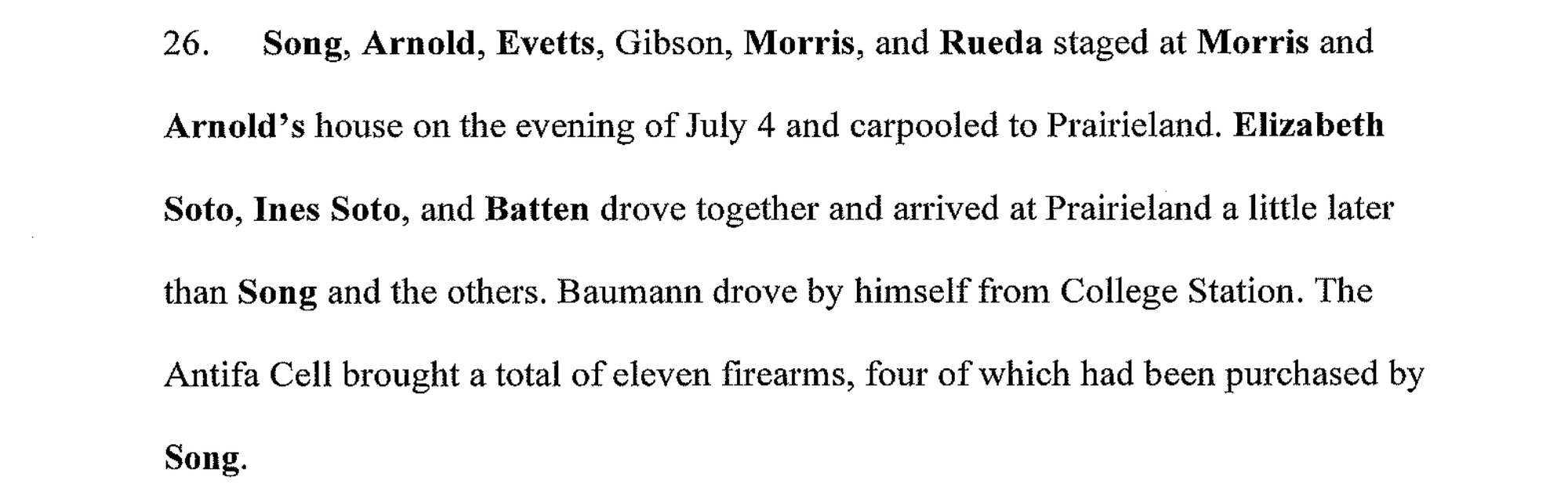
The night of the noise demonstration, police arrested eight of the 11 alleged protesters: Elizabeth Soto, Ines Soto, Nathan Baumann, Maricela Rueda, Seth Sikes, Savannah Batten, Zacharry Evetts, and Joy Gibson. Meagan Morris, who didn’t actively participate in the noise-demonstration, was pulled over near the scene and arrested.
At the time of our last report, two defendants had been federally indicted on material support to terrorism charges. Since then, most other defendants have also been indicted, and additional arrests have occurred.
This case has major implications for how federal and state authorities may pursue political prosecutions in the future.
The prosecution strategy mirrors conspiracy frameworks used against Stop Cop City defendants connected to protests near the Weelaunee Forest.
Specifically, prosecutors allege conspiracy based on:
- Participation in mutual aid and organizing groups
- Use of encrypted messaging through Signal Messenger
- Use of black bloc tactics
- Routine activist security practices, such as using timers for disappearing messages
Some defendants are being linked to the conspiracy for removing arrested people from Signal chats, moving zines, or possessing leftist literature, board games, or printing equipment.
Supporters argue this criminalizes political ideology and community infrastructure rather than criminal conduct.
Xavier de Janon, the director of mass defense at the National Lawyers Guild, has argued that this case could shape “the future of American civil liberties” and set a precedent that results in “people facing terrorism charges for doing very simple mainstream activism.”
Important Note
We do not take federal claims at face value. We know that the word of the federal government cannot be trusted.
This is the same federal enforcement system, including agencies like the Federal Bureau of Investigation and the U.S. Department of Homeland Security, that has previously made serious allegations later challenged or disproven in court. This is the same federal government that falsely accused two Venezuelan immigrants in Portland, OR of being violent gang members, in order to justify brutally shooting them in broad daylight.
This is the same federal government that falsely accused the two legal observers that its agents publicly executed in Minnesota of being “domestic terrorists”. This is the very federal government that is now also alleging the same of these 19 people in North Texas.
This article includes legal documents and contextual analysis. Inclusion does not equal endorsement of state narratives. We do not include this material because we take the word of the courts and police at face value. We hope you will not either.
Updates
Days after our last article, the 18th arrest occurred. The defendant was booked into Johnson County Jail on a $5 million bond, charged by Texas with "aiding in the commission of terrorism."
In November, the state further indicted two original defendants alongside eight others on charges including:
- Felony riot
- Conspiracy to use and carry an explosive (fireworks)
- Three counts of attempted murder of federal officers and employees of the United States
- Three counts of discharging a firearm during, in relation to, and in furtherance of a crime of violence
Many defendants also face federal material support charges.
Court documents later revealed one early defendant was identified to federal agents by another codefendant.

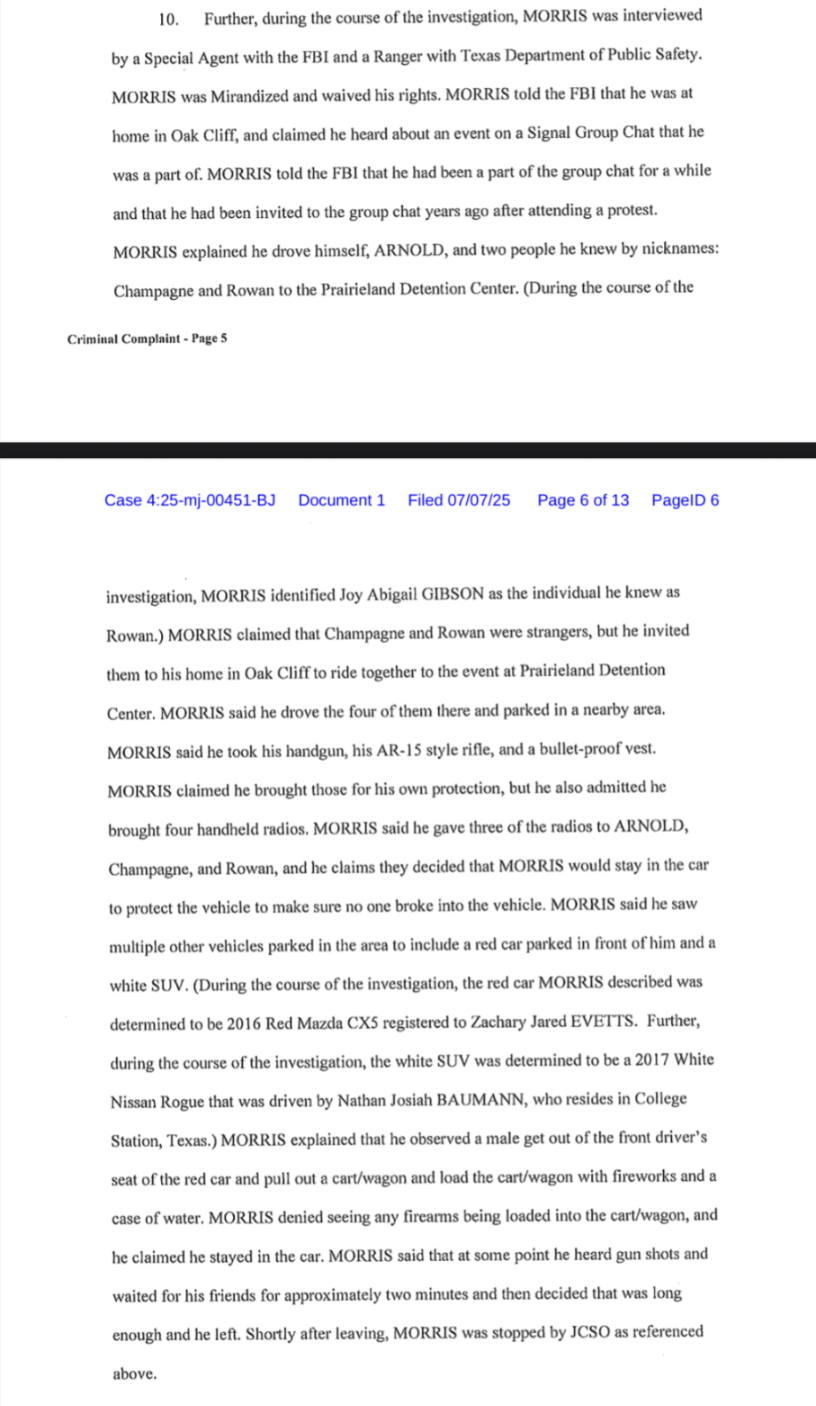
While also including references to other codefendants and their role in relation to the case, the above referenced criminal complaint was specifically submitted to the court to establish probable cause in the arrest of Daniel “Des” Rolando Sanchez-Estrada. The feds are alleging that him and his partner committed a conspiracy to destroy documents in the investigation when he moved a box of zines out of his partner’s car and into an apartment in Denton, Texas.
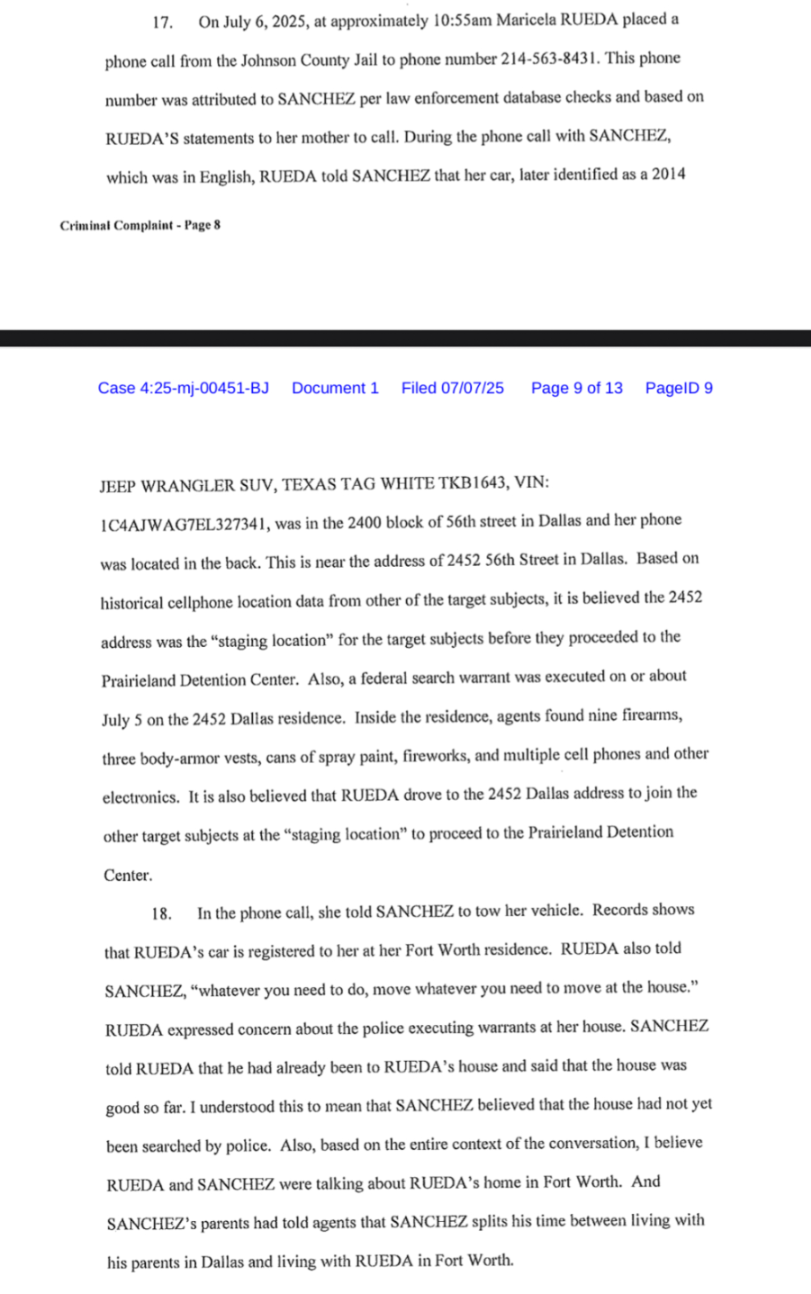
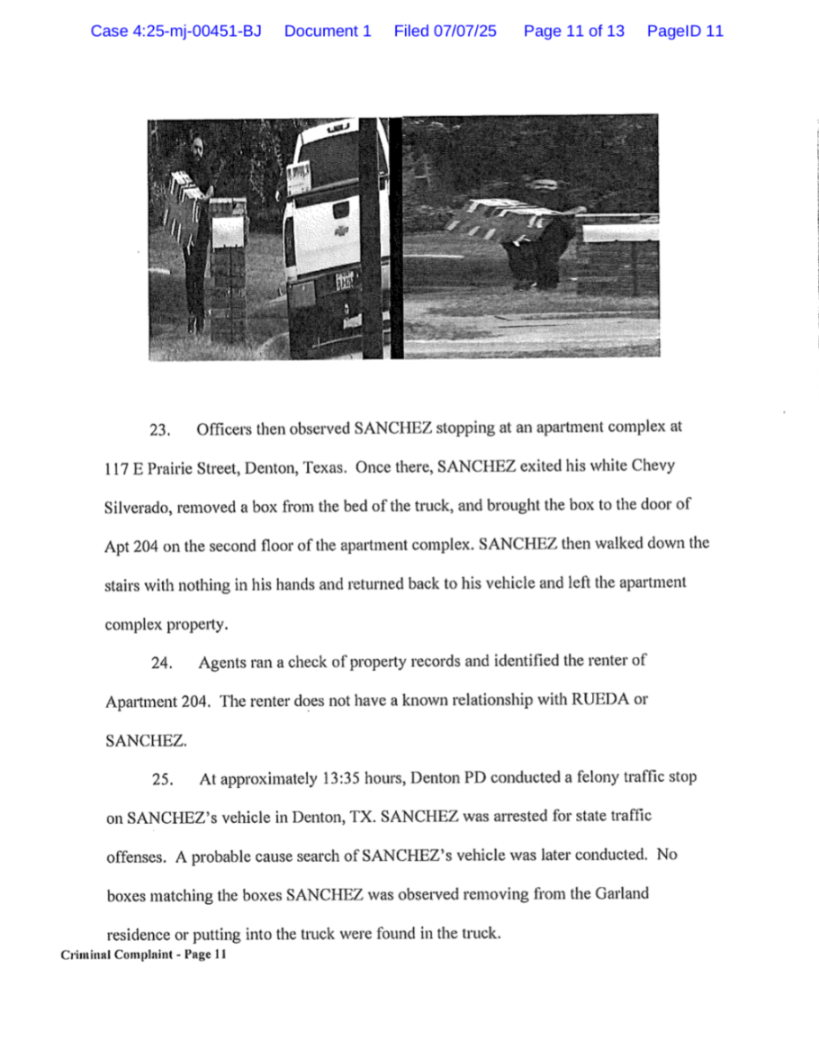
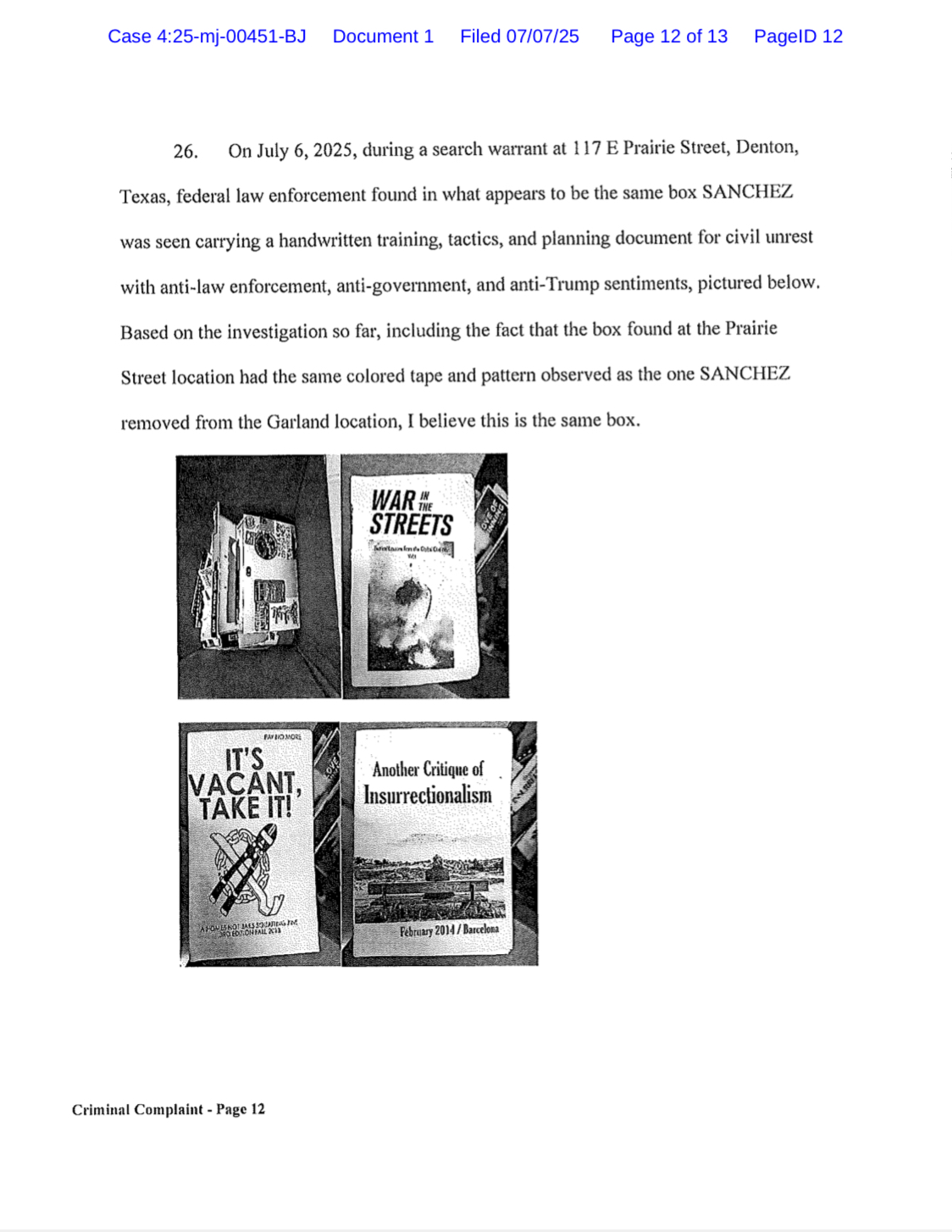
Other criminal complaints allege conspiracy to destroy evidence when zines were moved between vehicles and residences. Federal documents describe these materials as “insurrectionary materials” or “anti-government propaganda” and “antifa materials."
On top of the indictments listed above, in the same month of November, the state also additionally charged six other codefendants in the case of just a single count of providing material support to terrorists.
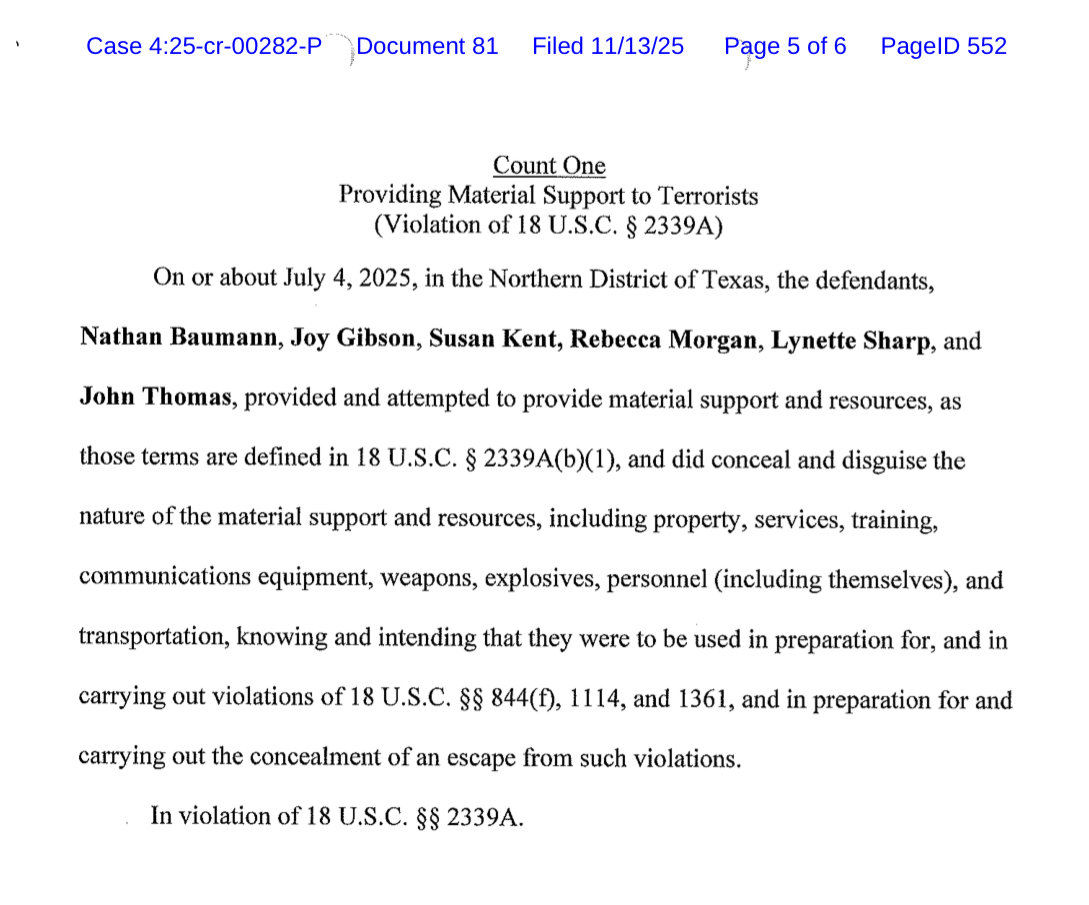
Charging by Information
Some defendants were charged by information rather than grand jury indictment.
This means prosecutors established probable cause through other mechanisms such as:
- Surveillance
- Search warrants
- Undercover operations
- Waiver of indictment rights
Exact circumstances vary and are not fully public.
Sentencing Exposure
If convicted, some defendants face minimum sentences of 10 years and potential life imprisonment. Others face sentencing ranges between 10 and 50 years. Some who accepted plea deals face up to 15 years.
This is a major conspiracy case with life-altering consequences.
Plea Deals
In November, seven defendants pleaded guilty to“providing material support to terrorists.” The nature of these plea deals are not entirely known at this time, but not all deals that were taken were non-cooperative.
Over 98% of federal cases resolve through plea agreements. Prosecutors often leverage extreme sentencing risk to pressure pleas. For this reason, it is incorrect to view any plea as a willing omission of guilt, as it is inherently coerced testimony that occurs with a looming threat of long term, potentially life long, incarceration otherwise.
Accepting a plea can also provide a defendant with an acceptance-of-responsibility credit, which is used on the federal sentencing guideline to help reduce a defendant’s overall sentence. While not a significant credit, this is often an incredibly appealing offer to those who prioritize individual safety over principled unity with the movement.
A plea is not necessarily an admission of factual guilt. It is often a survival calculation.
More clarity will likely emerge at sentencing.
Support Committee Endorsements
The Prairieland Defendants Support Committee currently endorses specific defendants. These names include: Autumn Hill, Benjamin “Champagne” Song, Daniel “Des” Rolando Sanchez Estrada, Dario Sanchez, Elizabeth Soto, Ines Soto, Janette Goering, Lucy Fowlkes, Maricela Rueda, Meagan Morris, Savanna Batten, Zachary Evetts, Rebecca Morgan, and Joy “Rowan” Gibson.
Some who took plea deals remain endorsed; others are not included. The committee has encouraged public review of court documents and independent decision-making.
We present this information for transparency, not to dictate movement or individual response.
On Cooperation
Many activist communities distinguish between:
- Giving statements under pressure
- Formal cooperation that helps build cases against others
Cooperation entails assisting the feds in building a case against someone. While sometimes, the feds are able to trick and intimidate people into speaking to them and making the mistake of providing potentially relevant information for a specific investigation, this cannot be conflated with the prolonged act of cooperation. Both are horrific and come with dire consequences, but one is a drastically worse form of betrayal that cannot be amounted to just a mistake resulting from intimidation.
Both have consequences. Community responses vary.
Court filings indicate at least one defendant provided information to federal agents about another codefendant, who the state is now attempting to establish as the supposed “leader” of the “antifa cell” in another federal indictment.
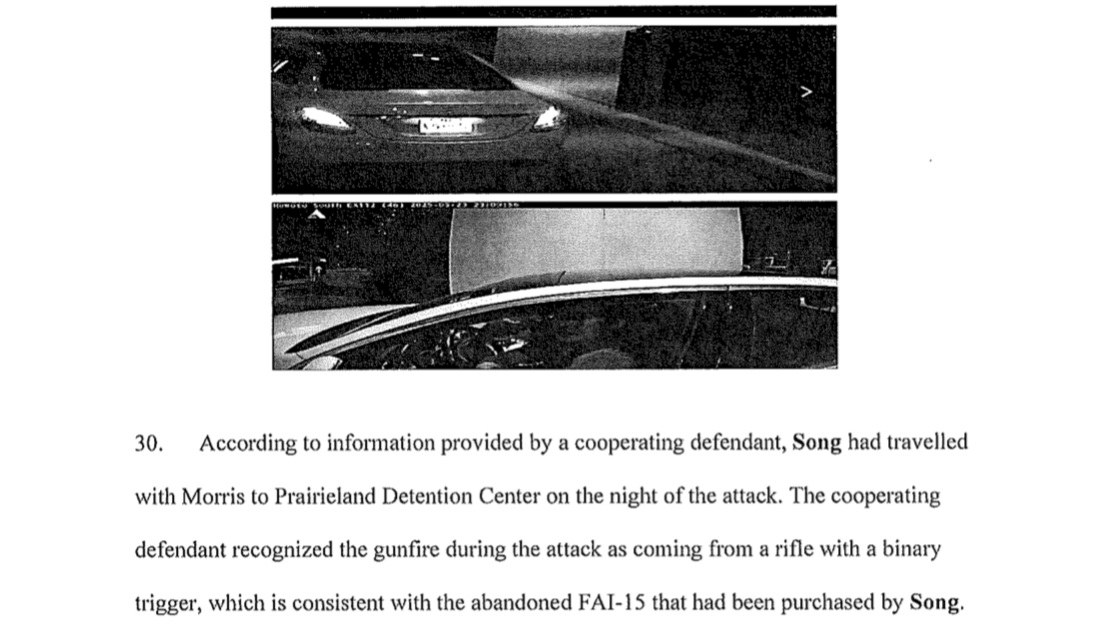
In the federal government’s criminal complaint for Sharp and Thomas, Thomas was one codefendant who provided an interview about Song to federal agents.
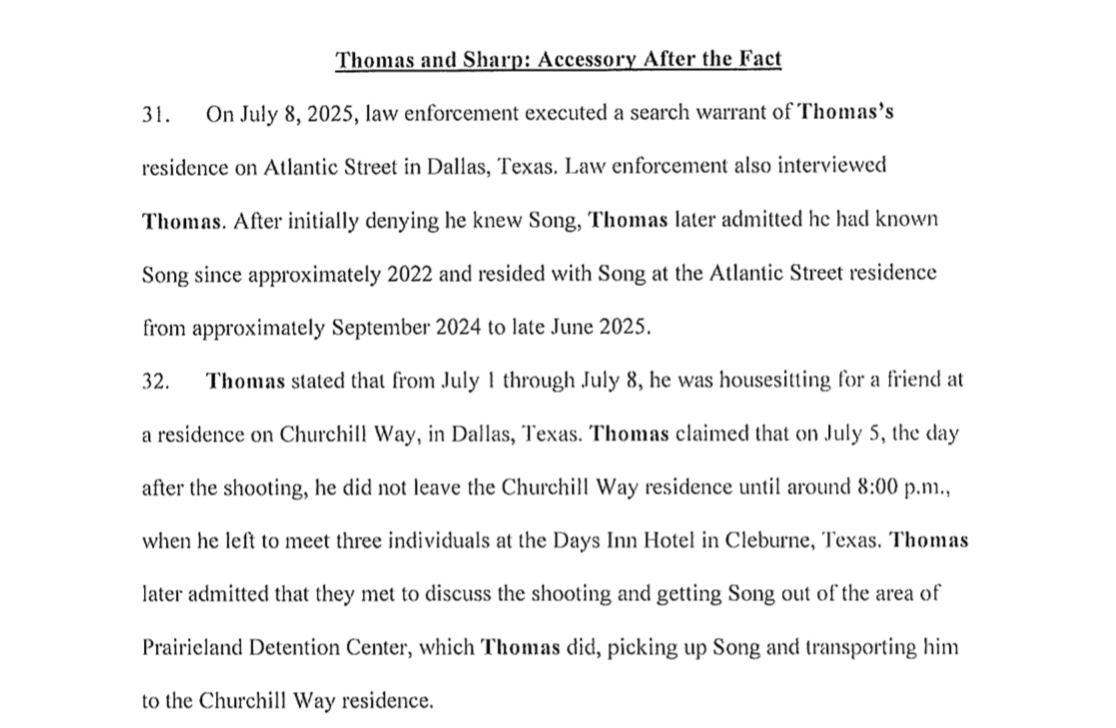
Recent arrests also appear partially based on testimony from other defendants.
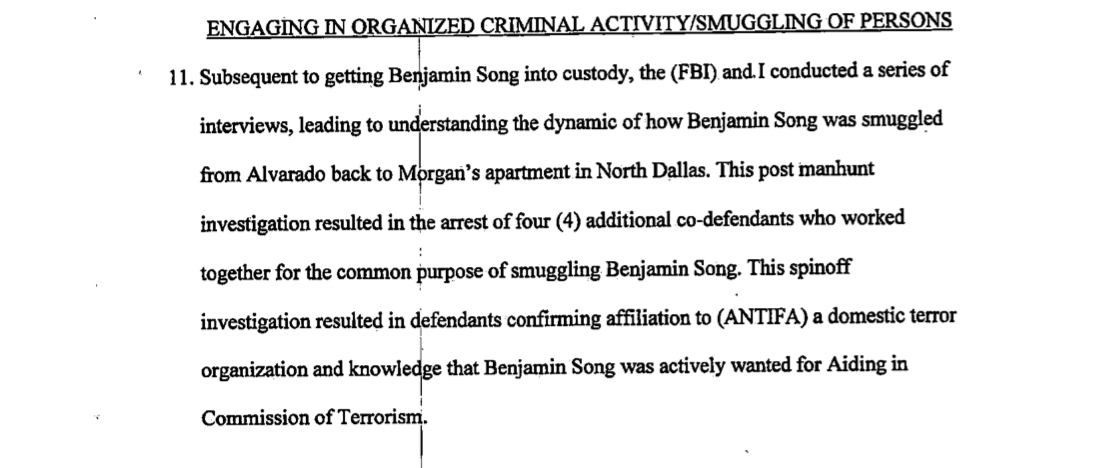
Concerningly, the criminal complaint also included specific messages that were sent in various Signal groups that different defendants were part of. It is unclear exactly how federal agents were able to access these specific chats.
According to the Texas Observer, "Sikes, who has pleaded guilty to providing material support to terrorists, told prosecutors that the role of Song, the alleged shooter, was to use his rifle to intimidate law enforcement so that the protesters could escape." In the Stipulated Facts for Baumann and Gibson, who also pleaded guilty to providing material support to terrorists, both defendants established Song’s role was to alert protesters if police arrived.
Attempts at Coercion
The most recent arrestee, Lucy Fowlkes, was taken into custody by local law enforcement on January 5th. Notably, the FBI was also involved in her arrest, even though she is facing only state and not federal charges.
Lucy was booked for “hindering the prosecution of terrorism” and has had her bond set at $10 million. She is currently incarcerated at the Johnson County Jail.
It is important to note that this same defendant was approached multiple times before her arrest by the FBI and encouraged to provide them with an interview about the events at the Prairieland facility, which she refused to do. Her arrest is clearly blatant retaliation for her non-cooperation and evidence of the fact that the state is simply targeting people for their political affiliations, not for actual alleged criminal activity in relation to the July 4th noise demonstration at the Prairieland concentration camp.
Lucy is not the only co-defendant who the feds attempted to pressure into cooperation.
Shortly after his arrest on July 15, just 11 days after the noise demonstration in Alvarado, Dario Sanchez was taken aside by FBI agent Casey Brashear and asked a series of questions relating to another co-defendant in the case, who would soon be arrested later that evening. The FBI agent then offered Dario a deal: if he allowed the police to impersonate him online, the agent assured him that he could avoid the possibility of 50 years in federal prison.
Dario refused to speak and asked for his attorney. He then spent 30 days straight in a solitary confinement cell.
Surveillance Implications
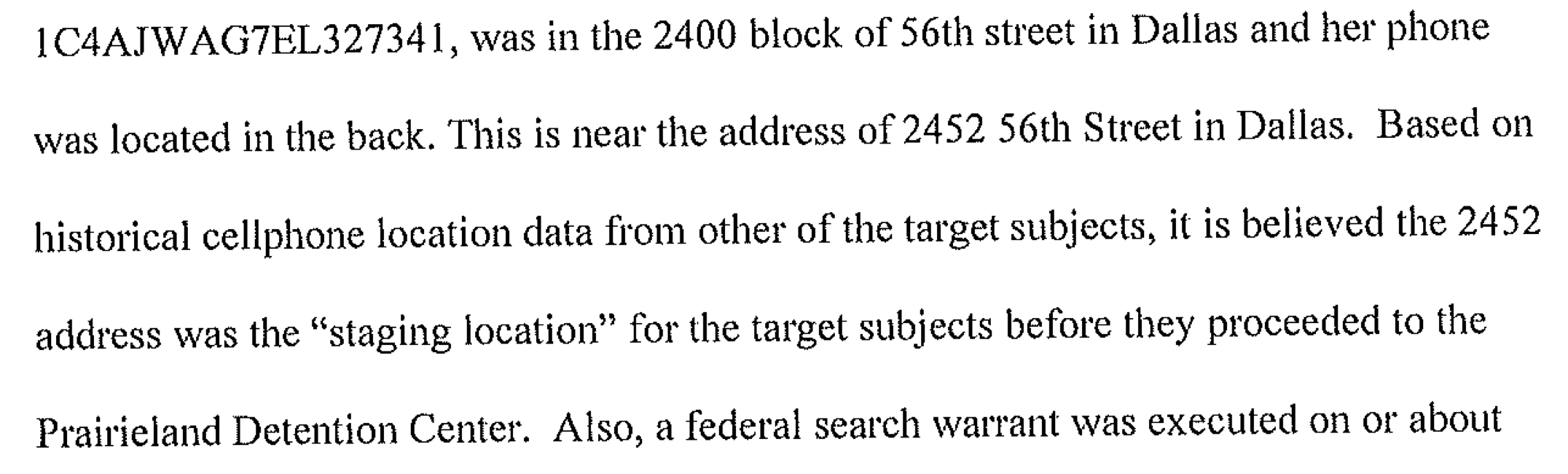
In one indictment, the feds allege that cellphone data was used to establish the home of one of the codefendants in the case as the "staging location,” where the codefendants would meet before traveling to Prairieland together. Signal is not foolproof. Defense groups and security experts stress that anything written digitally can potentially appear in court. The same applies to jail calls and correspondence.
Movement Context
Sweeping conspiracy prosecutions can fragment communities and increase cooperation pressure.
Support networks, such as letters, commissary support, and continued political inclusion, are often cited by organizers and defense support crews as critical to resisting isolation tactics. Community members should always have more to risk by cooperating than by not.
People typically choose to cooperate because they usually feel that the opposite is true. Losing the support of the community should always be something that people should have to weigh when they are facing the pressure to cooperate and help build a case against someone in their community. But this can only happen if people are connected with one another.
Ensuring community members have the support that they need addresses the isolation that the state threatens to impose on you in order to get you to cooperate. It is our job to ensure that our community always has a united front on their side. That’s how we work to curtail this specific aspect of repression.
Upcoming and Ongoing Trials
The first day of the federal trial began Tuesday, February 17. During the first day of jury selection, U.S. District Court Judge Mark Pittman declared a mistrial.
Judge Pittman said the mistrial was due to issues with defense attorney's attire. MarQuetta Clayton, who represents defendant Maricela Rueda, wore a shirt beneath her blazer featuring black-and-white images of Martin Luther King Jr. and other civil rights leaders in honor of the recent passing of Jesse Jackson. Pittman compared the shirt to “a shirt with Donald Trump riding an eagle,” adding, “I don’t know why in the world you would think that’s appropriate.”
The mistrial ruling came after repeated criticism from the judge toward Clayton’s jury questioning strategy, including her use of visual comparisons between peaceful noise demonstrations and riots, and questions about whether jurors believed firearms should ever be present at protests. According to a press statement from the Prairieland Defendants Support Committee, courtroom observer Cheryl Ananda said Pittman’s conduct demonstrated bias both in tone and in outcome.
Observers from anti-repression groups echoed that concern. Evan Grace, a representative of Fire Ant Movement Defense, described the judge’s comments as unacceptable, arguing that invoking civil rights imagery as grounds for dismissing a jury risked undermining the legacy of past protest movements.
Supporters now say the mistrial appears designed to reset jury selection in hopes of finding a panel more favorable to the prosecution. At a press conference following the ruling, Lydia Koza, wife of defendant Autumn Hill, warned that jury selection should not be treated as something prosecutors and judges can simply “re-roll” until they get a desired outcome.
Judge Pittman has ordered a new jury pool to be assembled beginning Tuesday, February 24 where he will take over the entire voir dire process, where attorneys may submit questions for consideration, but unable to ask any themselves.
Some observers said they were surprised by how openly members of the original jury pool voiced concerns about immigration enforcement and constitutional rights. At the same press conference, Amber Lowrey, sister of defendant Savanna Batten, said she believed public attitudes toward ICE and civil liberties are shifting in ways not reflected in federal prosecution strategy. The new proceedings are expected to move to a smaller courtroom, with a jury pool expanded to roughly 130 people instead of the previous 75.
Supporters say the delay extends pretrial incarceration for the nine defendants currently held in Tarrant County Jail. Members of the DFW support network have described harsh conditions inside the facility. Hannah Reed said defendants have faced prolonged solitary confinement, barriers to confidential legal access, repeated strip searches, and restrictive transport procedures. Tarrant County Jail has previously faced lawsuits and public scrutiny over detainee treatment. Reed also alleged inadequate food access and limited opportunities for basic hygiene before court appearances, conditions supporters argue can directly impact a defendant’s ability to participate in their own defense.
Supporters continue to dispute terrorism allegations. Lowrey has described the case as fundamentally about protest activity and solidarity with detained immigrants, arguing federal prosecutors are attempting to reframe protest as terrorism, something she says is happening in multiple cities across the country.
Critics of the prosecution also point to public statements by federal officials that they say risk influencing jury pools. During the current administration, federal agencies have publicly framed anti-fascist organizing as a domestic security priority. In September, the White House released National Security Presidential Memorandum-7 directing federal agencies to prioritize investigations related to anti-fascist activity. FBI Director Kash Patel has publicly described defendants in the case as “Antifa-aligned anarchist violent extremists” while sharing national media coverage of the prosecution on social media.
Supporters argue statements like these risk shaping public perception long before juries ever hear evidence in court, and could ultimately affect whether defendants are able to receive a fair trial.
This is an ongoing situation and we will update as necessary.
Recommended Reading:
 Sabr Qalam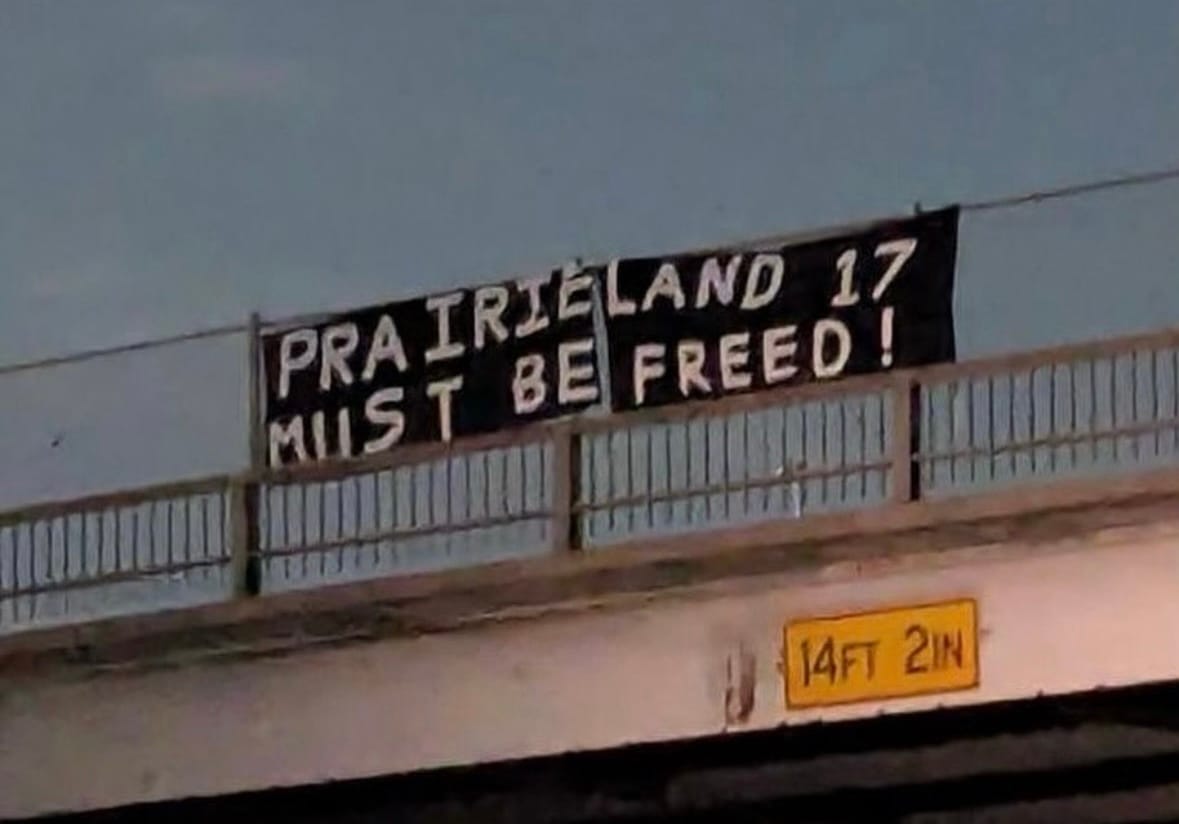
 Steven Monacelli